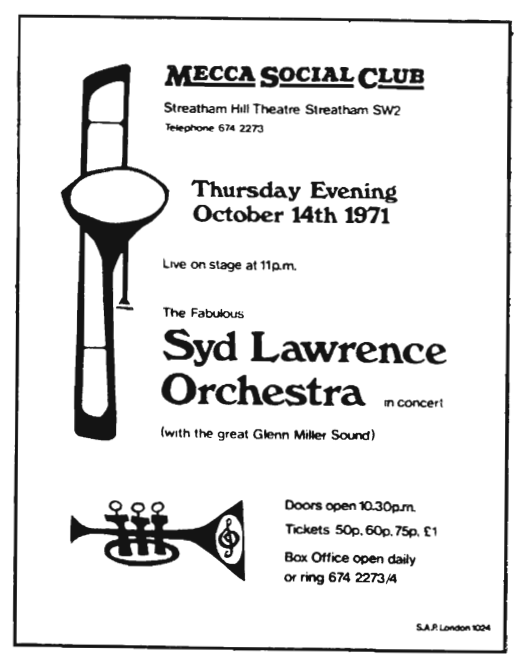
Colin Draper started work aged 16 at Streatham Hill Theatre. He recorded his career for the British Library’s Theatre Archive Project in November 2004, interviewed by Ewan Jeffrey. There’s a transcript (PDF) available too.
The interview starts with Colin describing how he started his career at Streatham Hill Theatre…
EJ: My first question would be could you give me a general overview of your theatre background?
CD: I have always worked on the technical side, but I started at the age of 16 as a third electrician in a touring theatre, which took pre London shows and shows going off on tour. It was at Streatham Hill, which is actually very near London. To me at 16, it seemed a big theatre. It had been bombed in the war and though I didn’t realise it until later it had only reopened in 1952, so I was actually working in the theatre three years after it had been reopened. We had classy shows of course, and as the third electrician. I wasn’t qualified. Truly, I got the job out of The Stage and went for an interview and got the job.
EJ: What kind of work was that?
CD: That is doing get-ins and fit-ups and working the board. We had a big grand master and a separate board to work the front of house lights and I used to work the front lights. They are cued together, but it is all very physical and very manual. You would do the focusing of the lamps, holding the ladder when the chief electrician went up to focus the lamps and you did this every week. Lighting then was much more primitive than it is today, very basic and very strong colours were used and that was a weekly turnaround. Sometimes there was a Sunday getting, sometimes a Monday, more or less on Monday morning getting and open Monday night.
EJ: What was the work structure and relationship, who were you working for particularly?
CD: There was a qualified electrician above me and a chief electrician, and we worked the strangest hours. We worked from nine o’ clock until one ‘o’clock and then went back for the evening show. I lived in Ealing and used to commute to Streatham Hill and go all the way home and then all the way back again. On matinee days we still went in, but we went for an early lunch and waited on a Wednesday matinee and a Saturday matinee. The structure, it’s almost the same in the West End now, is that you do mornings and evenings. So there is this dead period in the day where you commute and go home. It is an antiquated system of using labour. The larger management tend to, technicians or resident technicians work a ten hour four day week, so you go from ten in the morning until ten at night and they make you repair seats and do maintenance and at many theatres you can move your staff around. At night here is always a stage manager representing the theatre owners on call.
EJ: What sort of productions were you working on at that time?
CD: Mainly plays, musicals, D’Oyly Carte, large pantomimes at Christmas, nothing originated there. It was a bare stage with bare electrics, which we hung new lamps as happens today, as was required for the production. It all came on a lorry complete with washing machines, like today everything comes in complete on a lorry or lorries.
EJ: Were there any productions that were quite demanding from a technical point that stick in your mind?
CD: Musicals. I mean we used open a musical on a Monday night and you might have done a Sunday getting because there is more scenery, but you opened cold and you normally need stage hands called in, as and when required. A play wouldn’t need stage hands to run the show, so you open cold and you actually make as many notes as you can and you get instructions from the visiting stage manager or visiting company manager. It is touch and go on a Monday night. It relies on the professionalism of everybody.
EJ: Can you remember any particular productions that stick in your mind at that early stage?
CD: Well, Dirk Bogarde came and you couldn’t get out or in the stage door. He had been ill with pneumonia and was still a Rank Starlet I think and came back and worked on a play that was in the open air with Geraldine McEwan. Open-air brass sets are very difficult in the stage. It is easier now because I think you do more symbolism, but in those days you went for realism and outdoor sets are very hard to do, I just remember that. It had an old fashioned car in it, like a Genevieve car that came on the back of the stage. Frankie Howerd in Charley’s Aunt.
EJ: Did you speak to the actors much?
CD: Not a lot because electrics boards were big manual things that were half the way up the proscenium wall, in what they called a perch position, and very strict in those days. Once you were up there you stayed up there. Unless you came down to go and do a job and for those jobs where it was a play I walked across the back of the stage and through the cast door all the way up to the spot box to switch on the adverts. It had one of those slide projector things. They have gone out completely now, but in recent years they’d been worked on the prompt corner. As I physically walked across the stage, this young boy, and because actors realised that I was part of the team, once you were working the board, you might not have many cues, you sat down and watched it from the wings, you didn’t really move around. You were technical and you were the rest of the theatre. The actors who came in with their own stage management, they were friendly because they knew you were part of a team, even more so today. I suppose I did speak to people, but they were doing a job. They come down from their dressing room, they wait in the wings, not long, just feel of the auditorium, feel of the house, and you don’t really talk to actors when they are thinking about what they are going to do next. It is different when you are working on a new show and you are doing a lot of technical, you have a lot of chance to talk to everybody because there is a lot of hold ups. I did that for only about nine months, I think.
We thank the British Library for the use of this extract.






Leave a Comment